
Career Development Plan for Students

A career development plan helps students outline their goals and take steps to achieve them. It’s a flexible tool that evolves as your studies and career goals develop. Here you can download a free template for students, with examples, to guide you through the process.
This guide is designed for university and college students who want clarity about their future without locking themselves into a rigid career path too early. Whether you’re in your first year or approaching graduation, some planning helps you make smarter study, experience, and job decisions.
What is a Career Development Plan?
A career development plan sets out goals and steps for career success. Key elements include defining what you want to achieve and identifying the skills and actions needed to get there. The plan keeps you focused and helps track your progress.
For university and college students, a career progression plan focuses on making strategic education choices. You can use it to position yourself for a desired career path, whether you’ve committed to a specific field or are keeping options open.
As I’ve previously been quoted saying, “You need to be thinking about your future destination and steps to get you there often.” Adding structure with a professional development plan will help keep your thinking focused and on track.
Career Development Plan Template (Free)
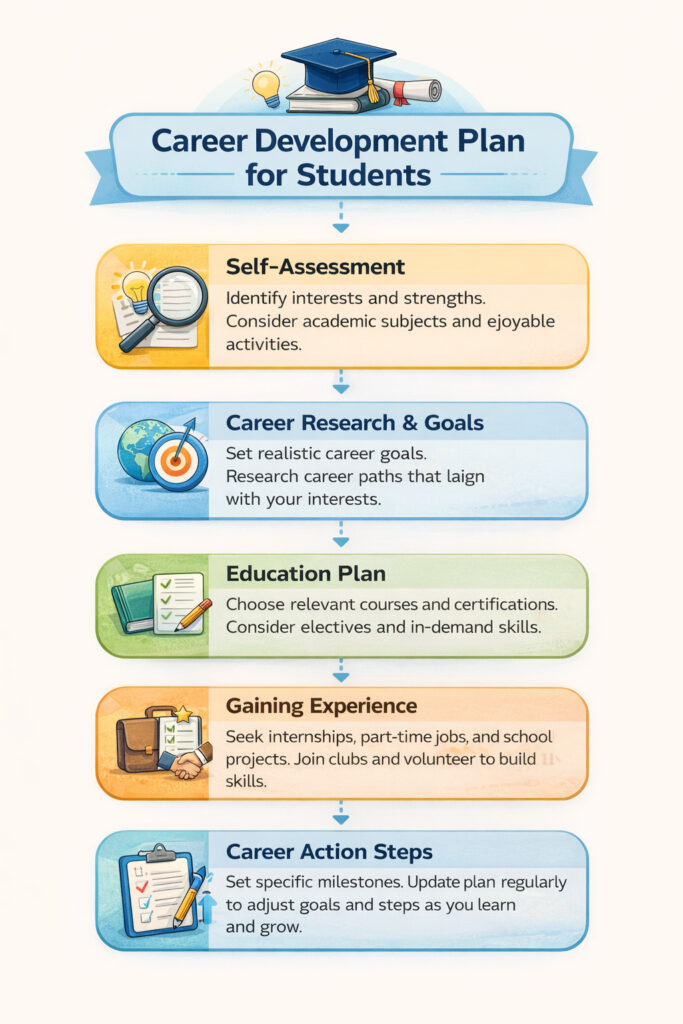
Download this template for free to map out your career goals. It consists of several sections. When combined, these create an education and career roadmap. You can update the career growth plan regularly without worrying about getting every detail perfect.
Template (Word) | Template (PDF)
Self-assessment
Write down your key interests and strengths. What subjects or activities do you enjoy? Consider your academic strengths and what excites you.
Career research and goals
Research career paths that match your interests. Set realistic goals, focusing on what you want to achieve during university and beyond. Consider jobs or further studies that will support those goals.
Education plan
List the courses and qualifications that will support your career objectives. Include electives, minors, or certifications that will give you an edge. Consider certifications in high-demand areas like cloud computing, financial modelling, or digital marketing.
Gaining experience
Look for internships, part-time jobs, and projects that can help you gain practical experience. Join relevant clubs or volunteer to build experience while you’re in school. Keep track of these experiences, as they can be added to your resume.
Related: How to Make a CV for Students with No Experience
Examples for Students
These career development plan examples show how students use the template across different fields, including technology, social sciences, business, psychology, and communications. Each student completes the plan based on their own interests, career goals, and education choices.
This career development planning framework reflects how employers, universities, and career advisors actually think about graduate readiness. It aligns with how entry-level roles are structured, how internships convert into full-time jobs, and how students successfully pivot when their original plans change.
Why Create a Career Development Plan?

At this stage, there are clear benefits for students who create career development plans. The thought and research that goes into it can reveal if you’re heading in the wrong direction, as well as uncovering opportunities.
A well-designed plan helps you make better decisions during your degree. It can guide your choice of major or electives, clarify which internships or part-time roles are actually relevant, and show whether postgraduate study is necessary for the path you want.
A career development plan doesn’t guarantee success. What it does is prevent wasted time.
Students who plan early make better course choices, build relevant experience sooner, and approach graduation with confidence rather than panic. Download the template, complete it honestly, and treat it as a living document. Small adjustments made early can completely change your long-term outcomes.
Career Planning Tips
- Be specific. Avoid vague statements. Define your goals and the steps required to achieve them. Specificity helps you stay focused and track your progress effectively.
- Actually do the research. Research the careers, skills, and qualifications required in your field. This helps you set realistic goals. You might also identify in-demand skills or certifications.
- Target broad fields if you’re not ready to commit. If you’re unsure about a specific career path, focus on broader fields. This gives you flexibility to adjust your plan as you get further into your degree and gain experience and insight.
- Stay flexible. Your plan isn’t set in stone. Review and adjust it as your interests, skills, and the job market evolve. Being open to change allows you to take advantage of new opportunities.
Related: How to Get a Job With No Experience
